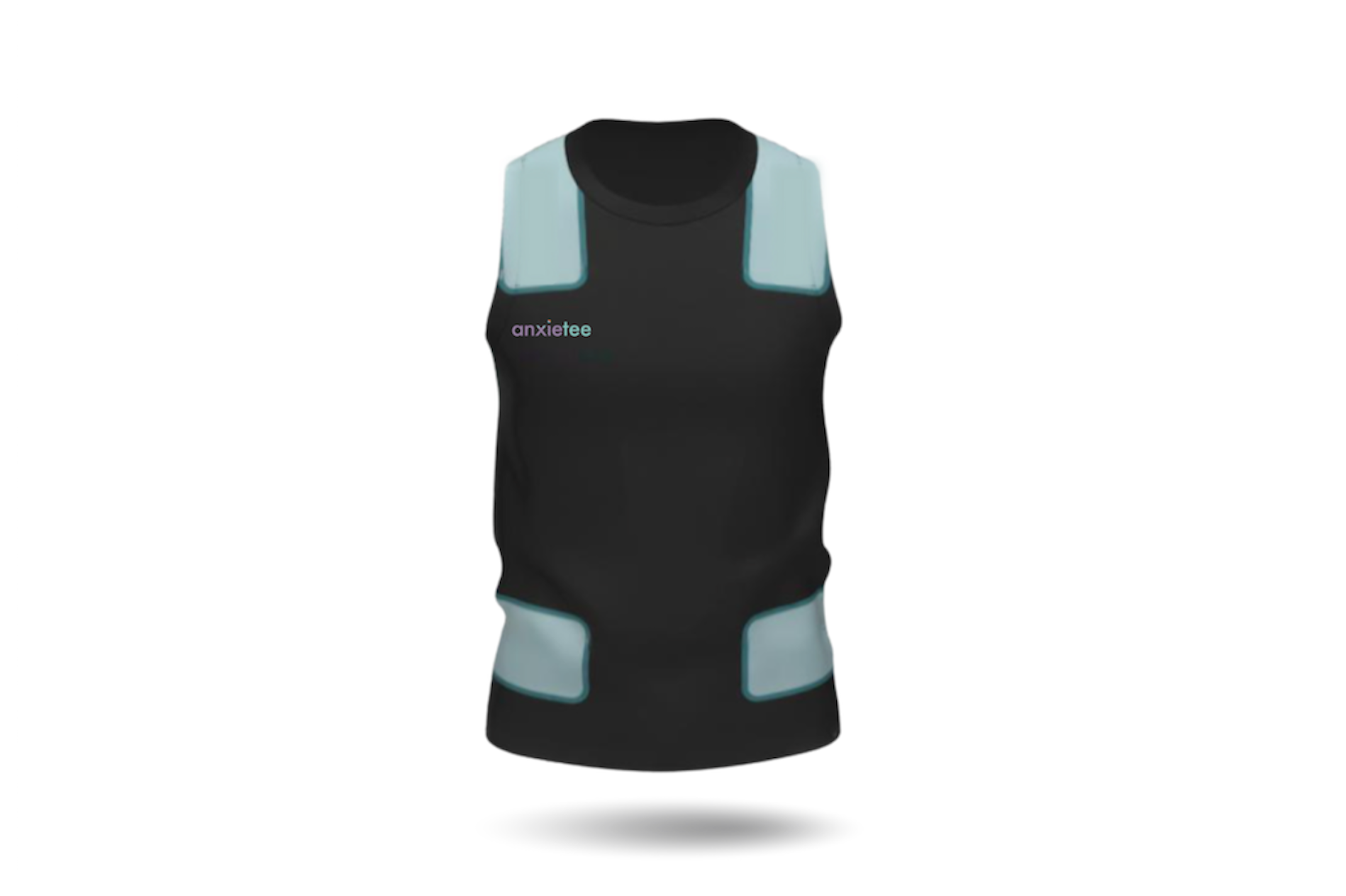
AnxieTee is a discreet, wearable solution designed to help individuals manage anxiety symptoms wherever they are.
Featuring hug-mimicking compression, therapeutic vibration, and customizable temperature control, AnxieTee empowers users to stay calm and composed in any situation, promoting confidence and focus without drawing attention.
What we built:
AnxieTee is a discreet, multi-sensory wearable undershirt that helps college students manage anxiety through compression, vibration, and temperature regulation.
Why it matters:
Anxiety among students is highly prevalent yet difficult to manage discreetly. AnxieTee empowers users to self-regulate in public without relying on pharmaceuticals or drawing attention.
Who it's for:
Primarily college students and young adults aged 18–30 experiencing anxiety in academic and social settings.
Biggest win:
We translated personal experience and user research into a tangible, viable product that offers silent, portable relief to students — with 100% of users expressing interest in testing a real version.
About AnxieTee
AnxieTee was born from a personal frustration: the lack of non-pharmaceutical tools for people experiencing anxiety in the moment. We developed AnxieTee as a wearable solution that leverages science-backed techniques—such as deep pressure stimulation, grounding vibration, and soothing warmth—to help users regain calm and control.
Anxiety can be overwhelming, destabilizing, and isolating. In those moments, telling yourself to “just breathe” isn’t enough. AnxieTee provides a discreet, physical anchor that supports the body’s natural regulation systems. Designed to be there when you need it most, it helps bring users out of their head and into the present. Since launching, the product has gained strong interest from students, therapists, and early-stage health innovation partners.
Key Insights & Statistics
"32% of college students in 2025 reported moderate to severe anxiety symptoms."
Across studies, one thing is clear — young people are struggling. Many can’t access the care they need, leaving symptoms to build quietly over time and spill into their academic, social, and physical wellbeing. Experts warn that without stronger support systems, this quiet normalization of emotional suffering could evolve into lifelong challenges. These numbers reveal more than statistics — they reflect an urgent need to rethink how we care for youth mental health.
Preliminary Interviews & Early Validation
Before forming a team and presenting the concept, six in-depth interviews were conducted with individuals experiencing anxiety to understand how the idea might be received and to inform initial product direction.
Grounding techniques (listing facts, focusing on senses)
Physical activity and sensory tools (fidget toys, weighted items)
Therapy and medication
Feature Preferences
Compression and cooling most helpful
Vibration appreciated but concerns about noise
Heating valued for muscle tension relief
Discreet and gender-neutral design emphasized
Interest & Acceptance
Most interviewees found the wearable anxiety relief concept compelling as an alternative to medication. Remote control functionality and lightweight, breathable materials were requested to enhance usability.
Diverse Needs
While most favored a tactile, physical product, some preferred app-based solutions providing psychological support alongside physical relief. These insights guided priorities for usability, discretion, and customization.
These early conversations validated the core sensory approach and highlighted critical design priorities around usability, discretion, and customization. The interviews set the stage for assembling a multidisciplinary team to prototype and iterate on the product, ensuring it addressed real user needs authentically and effectively.Before forming a team and presenting the concept, six in-depth interviews were conducted with individuals experiencing anxiety to understand how the idea might be received and to inform initial product direction.
Customer Discovery
We surveyed 41 participants, predominantly college-aged individuals experiencing anxiety symptoms. The most frequently reported physical symptoms included:
Physical Symptoms Survey Results
Rapid heartbeat (~85%)
Chest pain or tightness (~80%)
Difficulty breathing (~75%)
Muscle tension (~70%)
Nausea or upset stomach (~65%)
Trembling or shaking (~60%)
Headaches or dizziness (~55%)
Feature Helpfulness Ratings
Participants rated how helpful they expected various features to be for alleviating their symptoms (1 = not helpful, 5 = very helpful):
Feature Ratings
Cooling
3.7 / 5
Compression
3.25 / 5
Vibration
2.9 / 5
Heating/Warming
2.63 / 5
These preferences highlighted that cooling and compression would likely have the greatest impact for most users.
Target User — At a Glance
Who They Are
College students and young adults (ages 18–30)
Gender-neutral audience
Busy, socially active lifestyles balancing academics, work, and personal wellbeing
Experience anxiety in public or high-pressure settings
Mindset & Values
Value privacy, comfort, and emotional regulation
Prefer natural, non-pharmaceutical coping methods
Open to wearable or sensory-based solutions
Seek subtle, tech-enabled forms of self-soothing
Pain Points
Overstimulation in crowded or noisy environments
Difficulty calming down discreetly in public
Limited access to reliable stress-relief tools on-the-go
Feel overwhelmed by mental health stigma
Goals & Motivations
Desire accessible, discreet tools to manage anxiety
Want to maintain calm and confidence in daily life
Aim for improved focus, emotional stability, and social comfort
Seek products that blend wellness with design
Based on the varied symptom profiles, we adopted a flexible ‘and/or’ feature design approach, allowing users to tailor the product’s functionalities to their unique needs rather than forcing a one-size-fits-all solution. The survey responses emphasized the critical importance of discreteness, comfort, and ease of use in driving product adoption.
Qualitative feedback further revealed anxiety’s overwhelming and isolating experience, reinforcing the need for a discreet, physical grounding tool that users can rely on in real-time. These insights deeply informed our iterative design process and led us to prioritize compression, cooling, heating, and vibration modules as core features, each customizable for maximum user autonomy.
Iteration Process
1: Concept Prototyping
Focus on validating core sensory interventions: compression, vibration, heating, cooling.
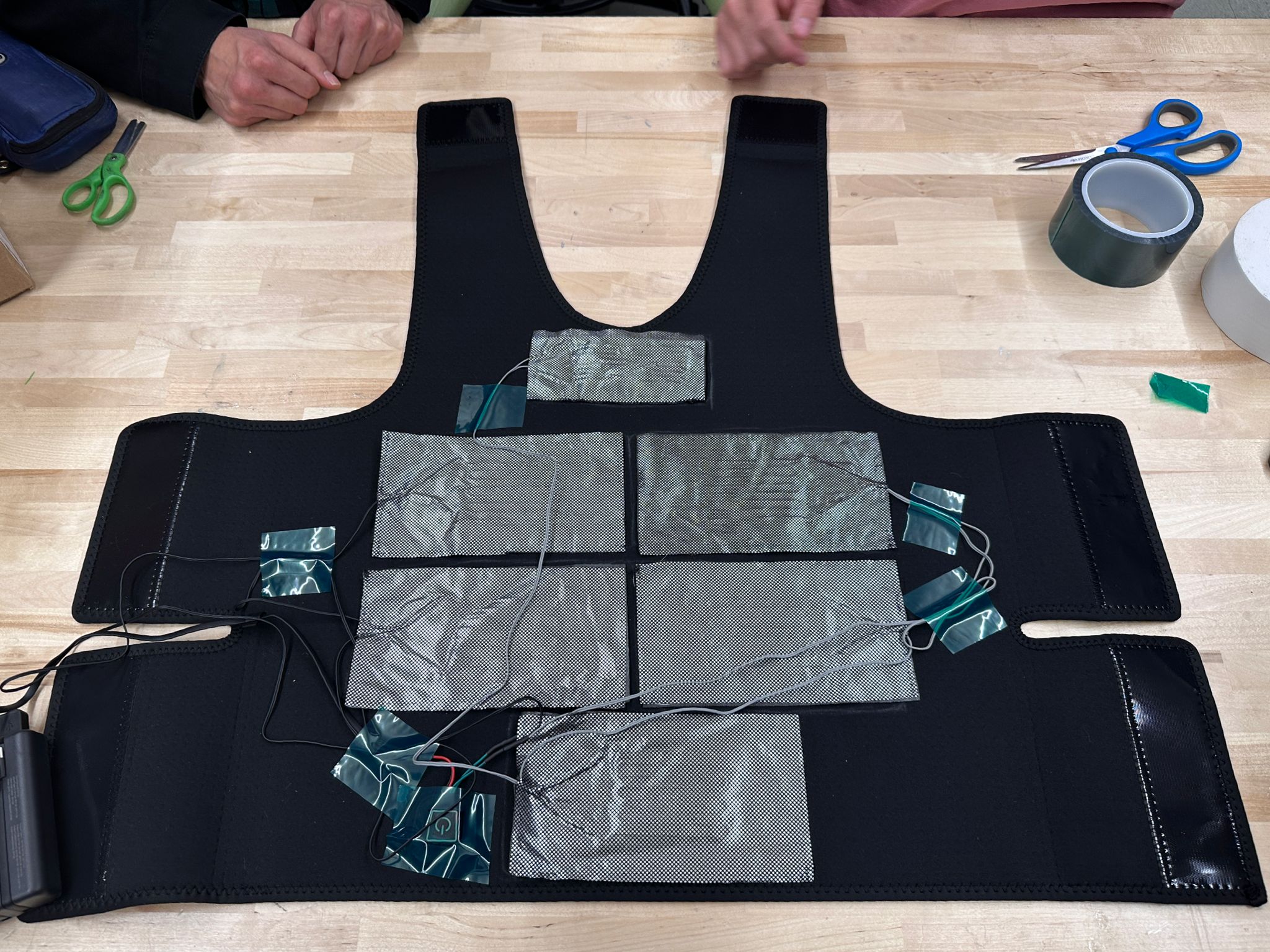
Early prototypes: elastic bands, hand-sewn gel pockets, off-the-shelf vibration motors.
Goal: test physical comfort and basic functionality.
Integrated Arduino-based control system for temperature and vibration.
Neoprene compression zones with adjustable straps.
Cooling with reusable gel packs in insulated pockets.
User wear testing highlighted fit and heat distribution improvements.
3: Wearability & Discreteness
Garment form factor refined for stealth and usability (tank top style).
Collected feedback on comfort during extended wear, breathability, and ease of removal.
Noise suppression strategies for vibration motors to maintain discretion.
4: Feature Optimization & Preparation for Pitch
Final MVP with optimized modular components and streamlined UI.
Enhanced battery life, simplified controls, improved stretch and fit.
Developed pitch materials highlighting user impact stories and technical innovation.
Positioned product for UCSD Blackstone Launchpad competition presentation.
The iterative process was grounded in an empathy-driven, user-centric approach ensuring that each design decision aligned with user needs, scientific literature, and usability goals. We prioritized modularity to respect the variability of anxiety symptoms across users, allowing customization of features based on individual preference and context. The focus on discreetness and comfort stemmed from early user feedback emphasizing the need to blend support with social acceptability.
Balancing hardware constraints (safety, durability, battery life) with wearability required cross-disciplinary collaboration and rapid prototyping to minimize trade-offs early. Mentorship and continuous testing enabled course corrections and refinement for a solution that supports users during their most vulnerable moments.
Competitive Audit
Feature
AnxieTee
Apollo Neuro
CalmCare Vest
Fidget Tools
Heat Pads
Multi-Sensory Relief
Individual Feature Control
Level Adjustability (e.g., temp, intensity)
Portable & Discreet
Grounding
Price
$300
$349
$40
$5–15
$20–40
While most products offer limited, targeted relief, AnxieTee stands out as a holistic, customizable solution for users seeking multi-sensory anxiety support.

.jpg)